
Ask most people to name a treatment for chronic pain, and you’ll hear the same handful of answers: physical therapy, an epidural, maybe surgery as a last resort. Few realize how far the field of interventional pain management has actually advanced. Every year, image-guided procedures move from research journals into everyday clinical use, offering patients options that didn’t exist even a decade ago, options many people never learn about until a physician mentions one by name.
That’s the gap Pain Awareness Month is meant to close. Established September 2001, the observance exists to remind patients that living with unresolved pain isn’t something anyone has to simply accept, and that the field treating it keeps changing.
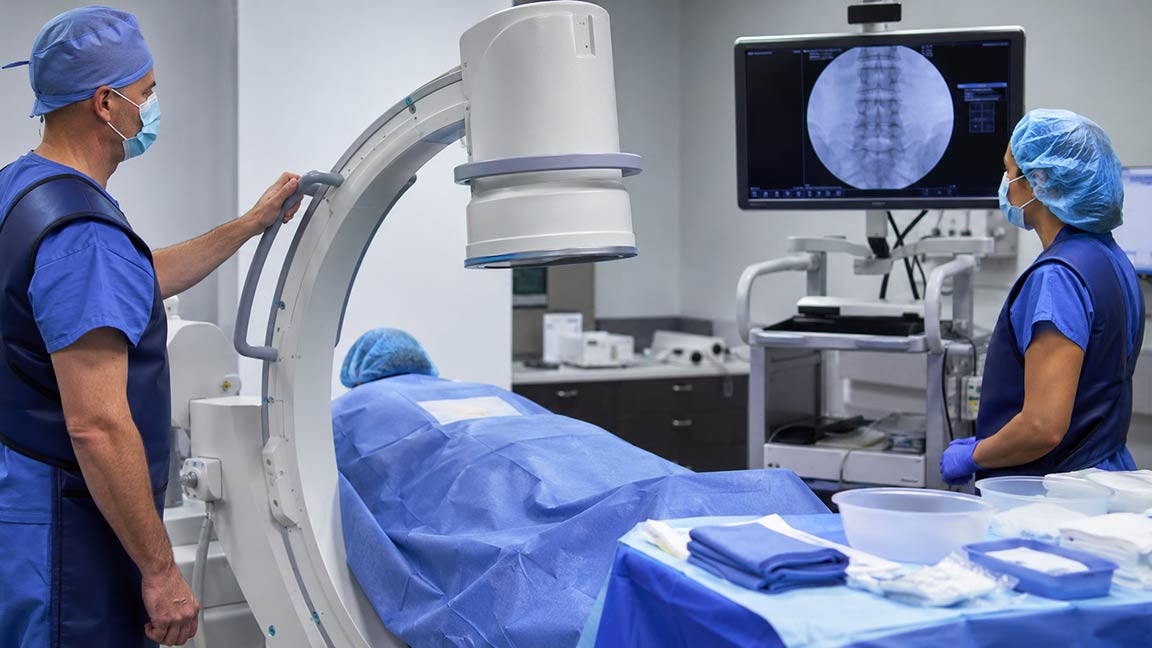
At NWA Interventional Pain, Dr. Stephen Irwin and our team focus on identifying the true source of a patient’s pain and treating it directly, using minimally invasive, image-guided procedures rather than relying on medication to mask symptoms. This September, instead of covering the treatments patients already ask about, we want to introduce a few that most people, including many who’ve lived with chronic pain for years, have simply never heard of.
Stellate Ganglion Block: An Unexpected Tool Against Resistant PTSD
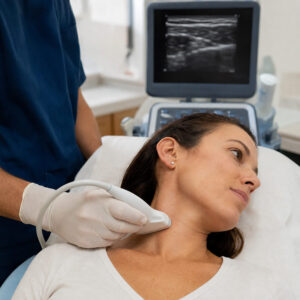
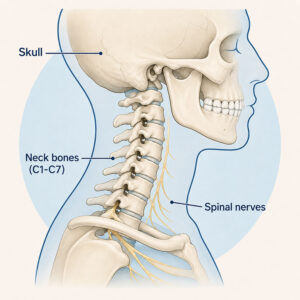 Here’s one that surprises almost everyone who hears about it for the first time. The stellate ganglion block, or SGB, is a procedure that has existed for decades to treat pain conditions like complex regional pain syndrome. It involves injecting a local anesthetic near a small cluster of nerves in the neck that make up part of the sympathetic nervous system, the system responsible for your body’s fight-or-flight response.
In recent years, researchers have discovered something unexpected: quieting this nerve cluster appears to also calm the hyperactive fear and threat response seen in some patients with post-traumatic stress disorder, particularly those who haven’t found relief through therapy alone. Clinical trials, including multi-site studies through the U.S. Department of Veterans Affairs (VA), are actively underway to better define who benefits and for how long.
A recent independent review of the research, conducted by Canada’s health technology assessment agency and archived through the National Library of Medicine, found the early results encouraging but concluded that larger, longer studies are still needed before SGB can be considered a standard PTSD treatment. That’s an important distinction: SGB is not a stand-alone cure or a replacement for trauma-focused therapy. It illustrates something important, though: a procedure originally designed for physical pain is now being studied as a way to interrupt the body’s stress response itself, a reminder that the line between physical and psychological pain is often blurrier than we assume.
Basivertebral Nerve Ablation: Treating the Bone, Not Just the Disc
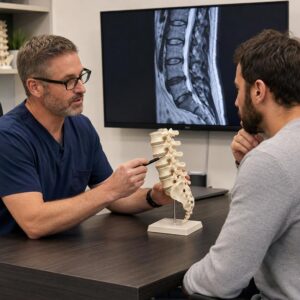
For decades, chronic low back pain that didn’t trace clearly to a disc or a joint was often left without a clear explanation, and without a clear treatment. Basivertebral nerve ablation, sometimes known by the brand name Intracept, changes that for a specific and previously under-recognized cause: vertebrogenic pain, pain that originates from the vertebrae themselves.
Small injuries to the endplates, the protective layers of tissue between each vertebra and its adjoining disc, can become inflamed and painful. That pain travels along a nerve tucked inside the bone itself: the basivertebral nerve. Using a specialized probe guided by imaging, a physician can access this nerve through the vertebra and disable it with targeted heat, all without disc surgery, without hardware, and typically without an overnight hospital stay.
As the Hospital for Special Surgery explains to patients considering the procedure, it’s designed specifically for back pain that comes from the vertebrae themselves rather than a disc or joint, which is exactly why it can help patients who haven’t gotten answers from more conventional treatments. For appropriately selected patients, most identified through characteristic MRI findings, the effect is often long-lasting.
Dorsal Root Ganglion Stimulation: Precision Relief for Stubborn Nerve Pain
Most people have heard of spinal cord stimulators. Fewer know about a more targeted cousin: dorsal root ganglion stimulation, or DRG stimulation.
Traditional spinal cord stimulation sends gentle electrical signals broadly across the spinal cord to interrupt pain. DRG stimulation takes a more precise approach, placing a small electrode directly beside the dorsal root ganglion, a bundle of nerve cells just outside the spinal cord that acts almost like a relay station for pain signals from a specific part of the body. Because the placement is so targeted, DRG stimulation has shown particular promise for pain confined to one area, such as the foot, knee, hip, or groin, including cases of complex regional pain syndrome that haven’t responded to standard spinal cord stimulation.
This isn’t just theory: a large randomized clinical trial published in PAIN, the field’s leading peer-reviewed journal, directly compared the two approaches and found DRG stimulation produced better, more consistent pain relief for complex regional pain syndrome, evidence that helped lead to its FDA approval. It’s a good example of how neuromodulation, the broader category of “resetting” pain signals with electrical stimulation, keeps becoming more refined and more targeted.
Why This Matters for Pain Awareness Month
The theme connecting all four of these treatments isn’t complexity for its own sake. It’s precision. Interventional pain medicine has moved steadily away from broad, systemic approaches and toward identifying the exact structure or nerve responsible for a patient’s pain, then treating that structure directly. That shift is also why we intentionally focus on procedures rather than long-term medication management: the goal is to address the source of pain, not simply dull the sensation of it.
Talk to a Specialist About Your Options
Pain Awareness Month is a good time to ask a simple question: have I actually been evaluated for what’s causing my pain, or have I only been treating the symptom? If you live in or near Springdale, Arkansas, and you’re living with chronic pain that hasn’t responded to conservative treatment, NWA Interventional Pain is here to help you find that answer. Dr. Stephen Irwin and our team serve patients throughout Northwest Arkansas.
This blog post is intended for general educational purposes only and does not constitute medical advice. It is not a substitute for a professional diagnosis or treatment plan. Please consult Dr. Irwin or another qualified physician regarding your specific symptoms or condition before making any medical decisions. If you are experiencing a medical emergency, call 911 immediately.