

Pain Awareness Month: The Interventional Treatments Most Patients Don’t Know
Ask most people to name a treatment for chronic pain, and you’ll often hear similar answers: physical therapy, medication, an epidural injection, or surgery as a last resort. What many patients don’t realize, however, is how far interventional pain management has advanced and how many treatment options may now be available before surgery is considered.
Modern pain management is increasingly focused on identifying the specific structure causing pain and treating it as precisely as possible. Using imaging guidance and minimally invasive techniques, an interventional pain specialist may be able to target irritated nerves, inflamed joints, or other sources of pain rather than simply treating pain as a general symptom.
Every September, Pain Awareness Month brings together physicians, researchers, patients, and advocates to increase understanding of chronic pain and the treatment options available to people living with it. It is also an opportunity for patients to learn that persistent pain doesn’t always mean their only choices are medication or surgery.
At NWA Interventional Pain in Rogers, Arkansas, Dr. Stephen Irwin and our team focus on finding the source of a patient’s pain and treating it directly whenever possible. Rather than relying on medication alone to manage symptoms, we offer minimally invasive, image-guided procedures designed to target specific causes of pain.
For Pain Awareness Month, we’re highlighting five interventional pain treatments patients may encounter when seeking treatment for chronic back pain, neck pain, sciatica, joint pain, and other painful conditions.
1. Epidural Steroid Injections
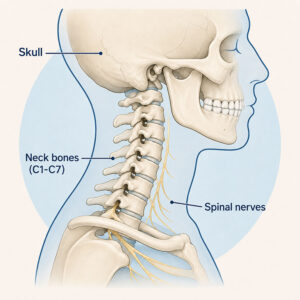 Epidural steroid injections are one of the more familiar interventional treatments for back and neck pain, but many patients don’t fully understand what these injections are designed to accomplish.
The epidural space surrounds the spinal cord and spinal nerves. When inflammation develops around a spinal nerve, it can contribute to pain that may travel into an arm or leg. Depending on the location and cause of the problem, patients may experience symptoms associated with conditions such as sciatica, spinal stenosis, or a herniated disc.
During an epidural steroid injection, medication is delivered into the epidural space near the affected area of the spine. The medication generally includes a corticosteroid intended to reduce inflammation and may also include a local anesthetic.
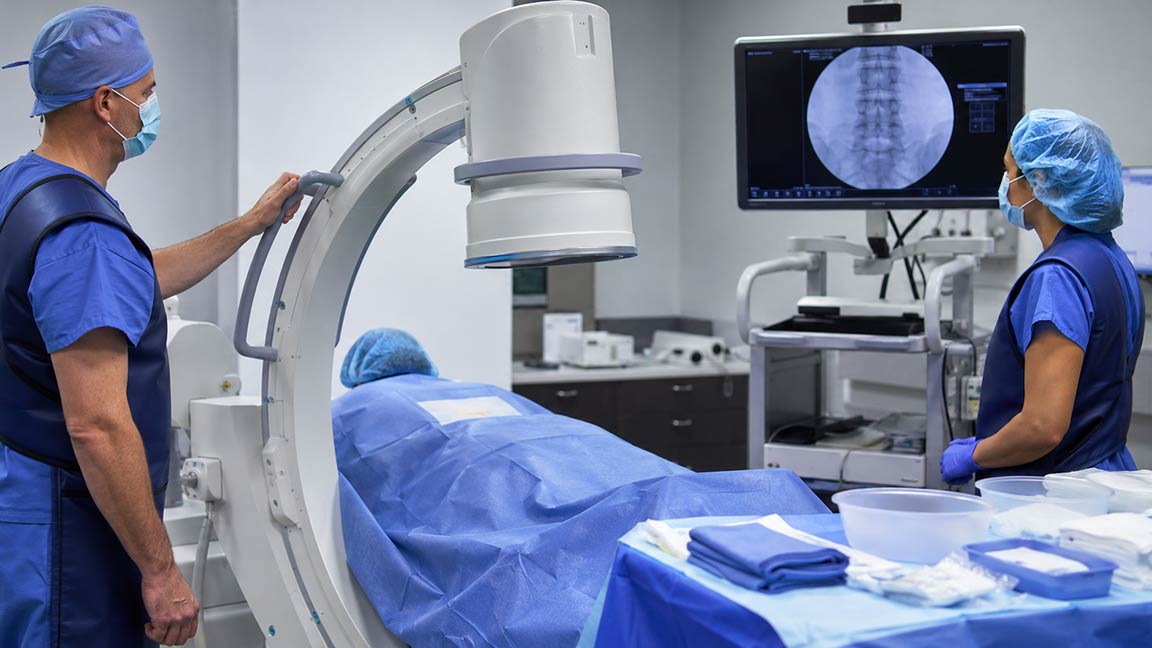
Imaging guidance, such as fluoroscopy, allows the physician to accurately position the needle and deliver medication to the intended location.
What Conditions Can Epidural Steroid Injections Treat?
Depending on the patient’s diagnosis, epidural steroid injections may be considered for conditions including:
- Herniated or bulging discs
- Sciatica and lumbar radiculopathy
- Cervical radiculopathy
- Spinal stenosis
- Degenerative disc disease
- Pain caused by inflammation or irritation of spinal nerves
An epidural injection isn’t intended to “fix” every cause of back pain. Instead, the goal is to reduce inflammation around an irritated nerve when that inflammation is contributing to a patient’s symptoms.
For some patients, reducing pain can also make it easier to participate in physical therapy, exercise, and other forms of rehabilitation.
2. Sacroiliac (SI) Joint Injections
Lower back pain isn’t always coming from the lumbar spine.
The sacroiliac joints, commonly called the SI joints, connect the sacrum at the bottom of the spine to the pelvis. You have one SI joint on each side of the body.
When an SI joint becomes irritated or painful, symptoms can sometimes resemble other causes of lower back pain.
Patients may experience pain in the lower back, buttock, hip, or nearby areas, which can make determining the true source of the problem challenging.
An SI joint injection involves carefully placing medication into the sacroiliac joint using imaging guidance.
Are SI Joint Injections Diagnostic or Therapeutic?
Depending on how the procedure is performed, an SI joint injection may provide useful diagnostic information and may also be used therapeutically.
A local anesthetic can help determine whether numbing the SI joint temporarily reduces the patient’s typical pain. If it does, that response may provide evidence that the SI joint is contributing to the symptoms.
A corticosteroid may also be used to help reduce inflammation within the joint.
The important point is that SI joint pain can sometimes be mistaken for other types of back or hip pain. Identifying the correct source of pain is therefore an important part of deciding which treatment makes sense.
3. Transforaminal Epidural Steroid Injections
A transforaminal epidural steroid injection, sometimes called a TFESI, is a more targeted type of epidural injection.
Rather than introducing medication more broadly into the epidural space, the physician approaches the area through the neural foramen—the opening through which an individual spinal nerve exits the spine.
This allows medication to be placed close to a specific nerve root believed to be responsible for the patient’s symptoms.
When Is a Transforaminal Injection Used?

Transforaminal epidural steroid injections are commonly considered when a particular spinal nerve has become irritated or compressed.
For example, a herniated disc in the lower back can irritate a nerve root and cause pain that travels from the lower back or buttock down the leg. Many patients recognize this pattern as sciatica.
Similar problems in the cervical spine can cause pain, numbness, tingling, or other symptoms extending from the neck into the shoulder, arm, or hand.
Because the injection can target a particular nerve root, a transforaminal approach may allow the physician to deliver anti-inflammatory medication directly to the area believed to be generating the patient’s symptoms.
The appropriate type of epidural injection depends on the patient’s symptoms, physical examination, imaging, medical history, and diagnosis.
5. Medial Branch Nerve Blocks
Not every case of chronic back or neck pain originates from a spinal disc.
Sometimes the problem involves the facet joints, which are small joints located along the back of the spine. These joints help stabilize the spine while allowing movements such as bending and twisting.
Like other joints in the body, facet joints can become painful due to arthritis, degeneration, injury, or repetitive stress.
Small nerves called medial branch nerves carry pain signals from the facet joints to the brain. A medial branch nerve block involves placing a small amount of anesthetic near these nerves.
What makes this procedure particularly interesting is that it can serve an important diagnostic purpose.
How Can a Nerve Block Help Diagnose Back or Neck Pain?
Imaging can reveal arthritis and other structural changes in the spine, but an abnormality on an MRI or X-ray doesn’t necessarily prove that it is the source of a patient’s pain.
A medial branch block can provide another piece of information.
If temporarily blocking the nerves associated with a suspected facet joint produces meaningful short-term pain relief, it may suggest that the facet joint is contributing to the patient’s pain.
That information can help the physician determine whether another treatment, such as radiofrequency ablation, may be appropriate.
5. Radiofrequency Nerve Ablation
For certain patients with pain originating from the facet joints, radiofrequency nerve ablation—also known as radiofrequency ablation (RFA) or radiofrequency neurotomy—may provide a longer-lasting treatment option.
Instead of repeatedly injecting medication into the painful area, radiofrequency ablation targets the small nerves transmitting pain signals from the affected joint.
During the procedure, the physician uses imaging guidance to position a specialized needle near the targeted nerve. Radiofrequency energy is then used to create a controlled lesion that disrupts the nerve’s ability to transmit pain signals.
Who May Be a Candidate for Radiofrequency Ablation?
RFA may be considered for certain patients with chronic facet-related neck or back pain who experienced significant temporary relief following diagnostic medial branch blocks.
The sequence is important.
A medial branch block helps determine whether a particular nerve is carrying pain from the suspected joint, while radiofrequency ablation may then be used to interrupt those pain signals for a longer period.
The targeted nerves can eventually regenerate, so radiofrequency ablation isn’t necessarily permanent. The duration and degree of pain relief also vary from patient to patient.
However, for appropriately selected patients, RFA can provide an option for managing certain types of chronic spinal pain without major surgery.
Why an Accurate Diagnosis Matters in Interventional Pain Management
These procedures may sound very different, but they share one fundamental principle: successful pain treatment starts with identifying where the pain originates.

Two people can both say, “My lower back hurts,” while having completely different underlying problems.
One patient’s pain could involve an irritated spinal nerve. Another person’s pain may originate from a facet joint. Someone else may have pain involving the SI joint.
Those patients shouldn’t automatically receive the same treatment.
This is one reason interventional pain management relies on a combination of a patient’s medical history, symptoms, physical examination, imaging studies, and, in some circumstances, diagnostic procedures.
The objective isn’t simply to determine where you hurt. It’s to understand why you hurt.
Why This Matters During Pain Awareness Month
Pain Awareness Month is about more than recognizing that chronic pain exists. It’s also an opportunity to help patients understand that pain medicine continues to evolve.
Epidural steroid injections, transforaminal epidural injections, medial branch nerve blocks, radiofrequency ablation, and SI joint injections may appear to address completely different conditions, but they share the same underlying approach:
Find the likely source of the pain and treat that source as precisely as possible.
For one patient, that may mean reducing inflammation surrounding a spinal nerve. For another, it may mean determining whether a facet joint is generating chronic neck or back pain. For someone else, the source may be an inflamed sacroiliac joint.
This targeted approach is one reason interventional pain management can provide options between conservative care and major surgery for appropriately selected patients.
It also explains why our focus at NWA Interventional Pain is not simply long-term medication management. When possible, we want to understand the underlying source of a patient’s symptoms and determine whether there is an appropriate procedure that can address it.
When Should You See an Interventional Pain Specialist?
Pain is different for every patient, and these treatments aren’t appropriate for everyone.
However, it may be worth discussing your symptoms with an interventional pain physician when chronic back, neck, leg, joint, or nerve pain continues despite conservative treatment or significantly interferes with your ability to work, sleep, exercise, or enjoy everyday activities.
An evaluation doesn’t automatically mean you need an injection or procedure.
The first step is determining what’s causing your symptoms. From there, you and your physician can discuss treatment options and decide which approach makes the most sense for your condition.
Talk to a Pain Management Specialist in Rogers, Arkansas
Pain Awareness Month is a good time to ask yourself an important question:
Have you been evaluated for the actual cause of your pain, or have you primarily been treating the symptoms?
If you live in Rogers, Bentonville, Springdale, Fayetteville, or elsewhere in Northwest Arkansas and chronic pain continues to interfere with your daily life despite conservative treatment, the team at NWA Interventional Pain can help you better understand your options.
Dr. Stephen Irwin and our team focus on identifying potential sources of pain and developing individualized treatment plans that may include minimally invasive, image-guided interventional procedures when appropriate.
Whether you’ve been living with chronic back pain for years or have recently developed symptoms that aren’t improving, a consultation can be an important first step toward understanding what’s causing the problem.
Call NWA Interventional Pain at (479) 413-4108 or email info@NWApain.com to request an evaluation with Dr. Stephen Irwin.
This blog post is intended for general educational purposes only and does not constitute medical advice. It is not a substitute for a professional diagnosis or treatment plan. Individual results and treatment recommendations vary. Please consult Dr. Irwin or another qualified healthcare professional regarding your specific symptoms, diagnosis, and treatment options before making medical decisions. If you are experiencing a medical emergency, call 911 immediately.